
⚠️ Content Warning
This post discusses the disappearance of a young Indigenous woman, suspected foul play, evidence mishandling, systemic law enforcement failures, and the Missing and Murdered Indigenous Women crisis. Some details may be distressing to sensitive readers.
Accuracy Disclaimer: All information in this article has been sourced from FBI records, BIA reports, congressional testimony, and credible news outlets including NBC Montana, I Am Interchange, and the University of Cincinnati International Human Rights Law Review. Where details remain unconfirmed, that is stated clearly. This case remains open and active. Nothing in this article constitutes legal accusation.
From the series: The Last Known Moment — A NaturalQueen77 TV True Crime Deep Dive
Introduction
Some cases don't just break your heart — they expose something broken in the system itself. The disappearance of Ashley Loring HeavyRunner is one of those cases.
On June 5, 2017, 20-year-old Ashley vanished from the Blackfeet Indian Reservation in Browning, Montana. She was a daughter, a sister, and — in a heartbreaking twist of fate — an active advocate for Missing and Murdered Indigenous People (MMIP) in the months leading up to her own disappearance. Eight years later, Ashley has never been found. No one has been charged. And her case has become one of the most high-profile examples of the systemic failures that continue to swallow Indigenous women whole.
This Evidence & Analysis post breaks down what we know, what was mishandled, and why this case matters beyond Ashley herself.
Who Was Ashley Loring HeavyRunner?
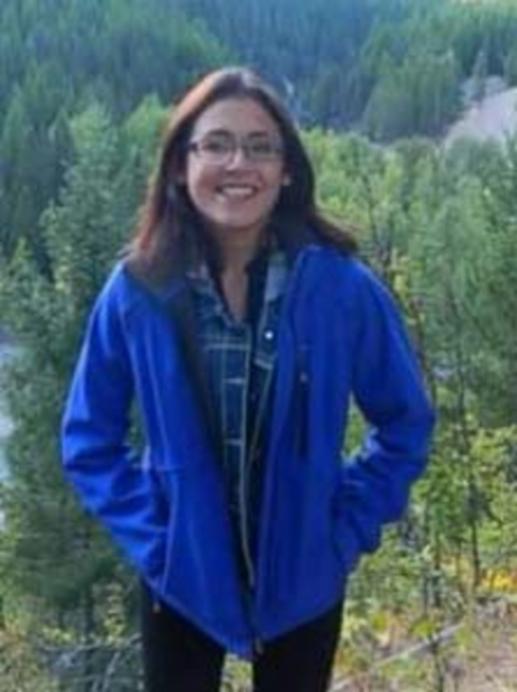
Ashley Mariah HeavyRunner Loring was born on November 23, 1996, in Browning, Montana — a small town on the Blackfeet Indian Reservation in the northwest corner of the state. She was a member of the Blackfeet Tribe and grew up deeply connected to both her community and her family.
Those who knew Ashley described her as smart, funny, and resourceful — someone with a strong personality and a genuine concern for others. She had a particularly close bond with her older sister, Kimberly HeavyRunner Loring, and the two maintained near-daily communication even when separated by distance. That bond would ultimately become the driving force behind one of the most relentless private searches in Montana history.
In the months before her disappearance, Ashley had become increasingly involved in MMIP awareness — showing up to events, advocating for families, and speaking about the epidemic of missing and murdered Indigenous women affecting reservations across the country. The cruel irony that she would become one of those statistics is not lost on anyone who has followed this case.
At the time of her disappearance, Ashley was reportedly pregnant.
The Last Known Moments
In the spring of 2017, Kimberly traveled to Morocco for approximately three months to visit her future husband. Before leaving, the sisters established a pattern of regular phone calls to stay connected across the distance. Those calls continued — until they suddenly didn't.
Just days before Kimberly returned home, contact with Ashley went silent. When Kimberly arrived back in Browning and realized Ashley was nowhere to be found, she began asking questions. What she uncovered would set off years of searching, advocacy, and a congressional battle that still hasn't produced justice.
Ashley Loring HeavyRunner was last seen on or around June 5, 2017, on the Blackfeet Indian Reservation. According to multiple accounts and community sources, she had attended a party on the reservation before her disappearance. The exact circumstances of what happened at or after that party remain unclear — a critical gap that investigators have never fully closed.
The FBI lists her last known location as Browning, Montana, and notes her disappearance during the week of June 13, 2017 in some records, creating a minor discrepancy in the official timeline. The BIA's Office of Justice Services anchors her missing date at June 5, 2017.
The Evidence — And What Happened to It
This is where Ashley's case takes a deeply troubling turn.
Evidence Point #1: A Buried Sweater Covered in Oil
One of the most significant pieces of physical evidence recovered in Ashley's case was a sweater covered in oil that had been buried underground. This item was discovered during one of the early searches — a potential forensic link to what may have happened to Ashley and possibly to a perpetrator.
Here is where things become inexcusable: the sweater was subsequently lost by investigators for months.
It wasn't until Kimberly testified before Congress — publicly exposing the failures of the Bureau of Indian Affairs and related officials in handling her sister's case — that the sweater was mysteriously "recovered." The timing was not a coincidence. The evidence had been mishandled, misfiled, or neglected. Had Kimberly not taken her case to Capitol Hill, that potential forensic link might have disappeared permanently.
Evidence Point #2: A Named Suspect and a Property Search
Ashley's family and investigators have identified at least one person of interest — described in reporting as a suspected drug dealer living on the reservation. According to accounts from reporters and documentary filmmakers who participated in the family's searches, this individual is one of the few active leads the family has pursued.
In 2019, Kimberly and a search party — accompanied by journalists from I Am Interchange — traveled to the edge of the reservation specifically to search this individual's property. The group was ultimately permitted to search, but the trail ran cold. The tension during the visit was palpable, and the threat of danger was real — not just from the remote terrain and grizzly bear country they traversed to get there, but from the potential for confrontation.
No charges have been filed. The DOJ has cited lack of evidence as the reason cases like this aren't prosecuted — a claim that critics argue reflects a lack of will more than a lack of facts.
Evidence Point #3: Kimberly's Congressional Testimony
While not physical evidence in the traditional sense, Kimberly HeavyRunner Loring's congressional testimony is one of the most consequential developments in this case. Her appearance before lawmakers shed direct, unflattering light on the BIA's handling of the investigation — and it directly triggered the recovery of the buried sweater.
Her testimony contributed to broader legislative conversations around Savanna's Act, which was signed into federal law in October 2020. The act requires the Department of Justice to develop and implement law enforcement protocols and guidelines to apply in cases of missing or murdered Indigenous women and girls. Ashley's case is frequently cited in discussions surrounding the need for that legislation.
The Investigative Failures: A System That Wasn't Built to Save Her
To understand how Ashley could vanish from a reservation and remain missing for nearly nine years, you have to understand the jurisdictional landscape of tribal lands in the United States.
The Jurisdiction Problem
The Blackfeet Indian Reservation spans approximately 1.5 million acres — a vast, rural expanse with a law enforcement presence that is, by every measure, wholly insufficient for the population it serves. Tribal, federal, and state authorities all carry overlapping and sometimes competing jurisdiction over crimes committed on reservation land, depending on the race of the victim, the race of the perpetrator, and the nature of the crime.
In practice, this means:
- ◦Tribal law enforcement may have immediate jurisdiction but lack resources and investigative capacity.
- ◦The FBI has jurisdiction over major crimes involving Native Americans, but agents are often spread thin and may not respond rapidly.
- ◦The BIA's Office of Justice Services provides law enforcement support but has documented shortfalls in both staffing and evidence management.
- ◦State and local police often have limited or no jurisdiction on reservation land.
The result is what advocates have long described as a "jurisdictional black hole" — where everyone's responsibility becomes no one's priority.
In Ashley's case, law enforcement was slow to respond and even slower to actively engage once her family began sounding the alarm. Kimberly has stated publicly that the lack of follow-up on leads, the mishandling of evidence, and the minimal accountability from BIA officials defined the early months of the investigation.
The Underreporting Crisis
As of 2019, over 5,590 Indigenous women in the United States were reported missing, according to data cited by the University of Cincinnati's International Human Rights Law Review. The operative word here is reported — because the systemic underreporting of violence against Indigenous people means the real number is almost certainly higher.
Ashley was 20 years old and pregnant when she vanished. She was not on the national news. She did not become a household name overnight. She did not prompt an immediate nationwide search. The disparity in media coverage and law enforcement resources between cases like Ashley's and cases involving non-Indigenous victims is stark — and documented — and it has direct, life-or-death consequences for families who need rapid, coordinated responses in the critical early hours after a person goes missing.
Murder is the third leading cause of death among Native American women in the United States. That is not a statistic that exists in a vacuum. It is the product of decades of underfunding, jurisdictional failures, systemic bias, and a cultural erasure that devalues Indigenous lives in the eyes of institutions designed to protect them.
The Family Never Stopped Searching
What is perhaps most striking about Ashley's case is not just what law enforcement failed to do — but what one woman chose to do in their absence.
Kimberly HeavyRunner Loring has spent years conducting her own searches across the Blackfeet Reservation. She has crawled through muddy ditches, combed remote ravines, and tracked down leads in grizzly bear country with little more than bear spray and determination. She has testified before Congress. She has participated in awareness rallies. She has given interview after interview, year after year, keeping her sister's name alive in a media landscape that often moves on.
An annual event, Ashley's Walk, has been held on the reservation in Ashley's memory, bringing together families of the missing and advocates determined to keep MMIP at the forefront of public and legislative consciousness.
As recently as 2025, Kimberly has spoken publicly about her family's desire to conduct one final organized search — acknowledging that closure may never come, but refusing to stop looking until every possible stone has been turned over.
Where Does the Case Stand Today?
As of 2026, Ashley Loring HeavyRunner remains missing. Her case is listed on the FBI's Most Wanted list under kidnapping, and is jointly investigated by the FBI's Salt Lake City Field Office and the BIA's Office of Justice Services.
No arrests have been made. No one has been publicly named as a suspect. No remains have been found. The case remains open.
If you have any information about Ashley's whereabouts or disappearance:
- ◦FBI Salt Lake City Field Office: 1-800-CALL-FBI (1-800-225-5324)
- ◦BIA Office of Justice Services: 1-833-560-2065
- ◦Submit a tip online: [tips.fbi.gov](https://tips.fbi.gov)
All tips can be made anonymously.
Analysis: Why This Case Is Bigger Than One Disappearance
Ashley's case is tragic in its own right. But it is also a window into a national crisis that continues to claim Indigenous women's lives at a rate that would trigger emergency responses if it were happening to any other demographic in America.
Three key takeaways from the evidence in this case:
1. Evidence mismanagement is not a clerical error — it's a crisis. The fact that a buried, oil-soaked sweater recovered at the scene of a missing person's case was lost by investigators for months — and only recovered after a family member went to Congress — is not a bureaucratic inconvenience. It is a failure that may have cost investigators the window to act on a critical forensic lead. In cases where every day matters, this is inexcusable.
2. Jurisdictional complexity is being weaponized against Indigenous communities. The overlapping patchwork of tribal, federal, and state jurisdiction over reservation land was not designed with victims' interests in mind. Until there is a clear, coordinated, and sufficiently funded law enforcement framework for reservation communities, perpetrators will continue to exploit those gaps.
3. Legislation without implementation is theater. Savanna's Act passed in 2020, in part because of cases like Ashley's. But legislation that isn't adequately funded and enforced does not save lives. The families of the missing are still — years later — conducting searches themselves, navigating hostile terrain, and fighting a bureaucracy that should be fighting for them.
Ashley Loring HeavyRunner deserved better. Her family deserves answers. And every Indigenous woman and girl living on a reservation in the United States deserves a system that treats their life as worth protecting.
Sources
- ◦FBI Most Wanted – Ashley Loring HeavyRunner: [fbi.gov](https://www.fbi.gov/wanted/kidnap/ashley-loring-heavyrunner)
- ◦Bureau of Indian Affairs, Missing-Murdered Cases: [bia.gov](https://www.bia.gov/missing-murdered-cases/ashley-loring-heavy-runner)
- ◦NBC Montana – *"Vanished in Montana: Ashley HeavyRunner's Family Without Closure Nearly 8 Years Later"* (2025)
- ◦I Am Interchange – *"The Search for Ashley HeavyRunner Loring"* by Jessica Bayramian Byerly (November 2019)
- ◦University of Cincinnati International Human Rights Law Review – *"Missing and Murdered Indigenous Women: Ashley Loring HeavyRunner and Jurisdictional Inadequacies"* (May 2021)
- ◦AP Images Blog – *"Death and Disappearance in Indian Country"* (September 2018)
🎙️ Listen to the Episode
This case is covered in depth on The Last Known Moment podcast. New episodes drop every Tuesday.
NaturalQueen77 TV is an independent true crime media channel. We cite court documents and credible sources. We believe these names deserve to be spoken.
If this content affected you, please reach out to the [Crisis Text Line](https://www.crisistextline.org/) by texting HOME to 741741.
NaturalQueen77 TV
True Crime — Told Responsibly
This article is based on publicly available information and is for educational and informational purposes only. NaturalQueen77 TV strives for accuracy but cannot guarantee completeness. Content warnings are provided where applicable.